Five High-Demand Jobs in Hampton Roads You Can Train for at VersAbility TECH
Hampton Roads is built around industries that keep goods moving, ships sailing, and the nation’s defense infrastructure operating. From the Port of Virginia and the world’s largest naval base to shipbuilding, Naval Station Norfolk, advanced manufacturing, and emerging technologies, the region offers significant opportunities for people interested in skilled, hands-on careers.
But employers need people with the right skills to fill those jobs.
Meet VersAbility TECH, the workforce training initiative that prepares people with and without disabilities for in-demand careers through hands-on training, developed in close collaboration with employers.
According to Casey Roberts, Executive Vice President of Strategy and Development for VersAbility Resources, five career areas stand out in the Hampton Roads workforce: welding, marine coating and painting, non-destructive testing, unmanned systems, and logistics.
“These positions are in demand now and will be in the future,” Roberts said.
Here’s a closer look at five career paths offering opportunities across the region.
1. Welding
Welders are essential to many of the industries that power Hampton Roads, particularly shipbuilding, ship repair, manufacturing, and construction.
VersAbility TECH’s Welding Program combines classroom instruction with extensive hands-on practice using structural steel. Students develop practical welding skills while preparing for industry-recognized certifications, including SMAW, ARC I, ARC II, and AWS D1.1.
Those skills can lead to opportunities in shipyards, industrial facilities, manufacturing operations, and other workplaces that rely on skilled welders.
For Roberts, Hampton Roads’ maritime assets make this an especially strong region for welding and related trades.
“There is a lot of new ship construction happening, but there is also a tremendous amount of repair work,” Roberts said. “We have to build the new platforms, but we also have to maintain and repair the ships that are already in service. So when you look at the workforce need, it is not going away. We are going to need skilled people doing this work for years to come.”
2. Marine Coating and Painting
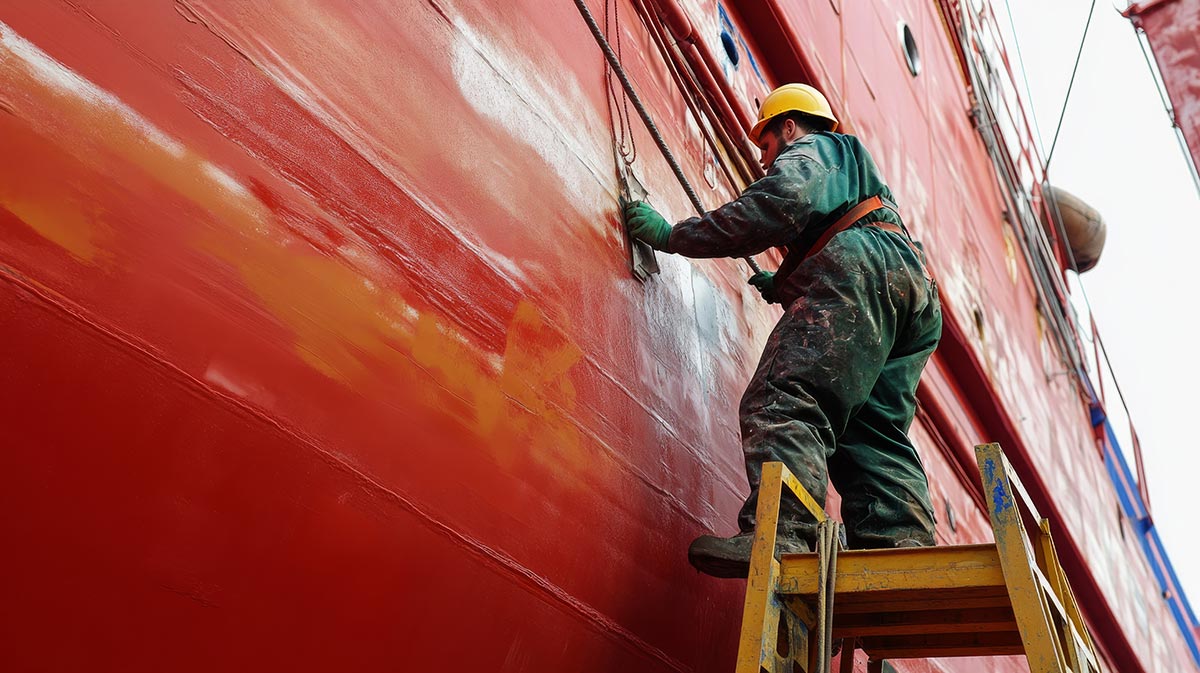
Building and maintaining ships requires much more than welding. Marine coating and painting professionals help protect vessels and other maritime structures from corrosion and the harsh conditions of a marine environment.
It is specialized work with an important role in extending the life of ships, equipment, and infrastructure.
Marine coatings is also among the employer-aligned training pathways identified for the continued expansion of VersAbility TECH. As the initiative grows, the goal is to build training around specific skills that regional employers say they need.
Rather than developing programs in isolation, VersAbility TECH invites employers to help shape the curriculum.
“We are working closely with employers from the very beginning to help us design the curriculum,” Roberts said. “We want to know exactly what skills they are looking for, so we can build our training around those needs and prepare people to step into those jobs ready to work.”
3. Non-Destructive Testing
Another critical maritime and manufacturing career path is non-destructive testing, often referred to as NDT.
NDT technicians use specialized methods to inspect materials, components, and structures for flaws without damaging them in the process. In industries where safety and reliability are critical, these professionals play an important quality-control role.
Roberts identified non-destructive testing in maritime applications as another area with strong potential for job seekers in Hampton Roads.
It also illustrates the variety of careers available within the skilled trades. Not every maritime career involves constructing something. Employers also need skilled professionals who can inspect, test, and help ensure that ships, components, and other critical assets perform as intended.
4. Unmanned Systems
Some of the region’s most promising careers are tied to technologies that are still rapidly evolving.
Unmanned systems can include aerial drones as well as autonomous and remotely operated marine systems. Their applications stretch from national defense to commercial delivery, infrastructure inspection, and other emerging uses.
Hampton Roads is particularly well positioned for growth in this field because of its military presence, research institutions and access to the Chesapeake Bay, rivers, and other environments that can support the development and testing of new technologies.
There is also a workforce need beyond designing and operating these systems.
“There is also a growing need for people who can maintain and repair these unmanned systems,” Roberts said. “As the technology continues to grow, we have to make sure we are developing the skilled workforce needed to support it.”
That creates opportunities for technically minded individuals who enjoy troubleshooting, maintenance, technology, and hands-on work.
5. Logistics and Material Handling
Few industries demonstrate Hampton Roads’ connection to the global economy more clearly than logistics.
Products and materials moving through ports, warehouses, manufacturing facilities, and distribution centers depend on people who know how to move goods safely and efficiently. Logistics careers can include material handling, forklift operation, warehousing, inventory, and supply chain functions.
VersAbility TECH already offers hands-on forklift training designed to prepare participants for material-handling opportunities.
Roberts noted that the supply chain disruptions experienced during the COVID-19 pandemic demonstrated just how interconnected the global economy has become.
“Everything is interconnected through logistics,” he said. “The supply chain and procurement process is all about how you get products to market quickly and efficiently.”
In Hampton Roads, those skills are especially relevant because logistics intersects with both the maritime and manufacturing sectors.
Technical Skills Are Only Part of the Equation
Training for a high-demand job requires learning how to perform the work, but Roberts emphasizes that employers are looking for more than technical ability.
Skills such as reliability, communication, teamwork, and conflict resolution can be just as important.
“What I hear from employers is pretty simple: ‘Can said individual show up on time? Does said individual have a good attitude? Can said individual work well with others?’” Roberts said. “The technical skills are important, and we can train for those, but employers are also looking for people who are dependable, willing to learn, and ready to be part of a team.”
VersAbility TECH incorporates these durable workplace skills into its training model so participants are prepared not simply to earn a credential, but to succeed on the job.
The model is intentionally hands-on. Employers are encouraged to participate in the development of training programs, and students have opportunities to work with real materials and situations that reflect what they will encounter in the field.
“We are training as if they are already in the field,” Roberts said. “This is workforce development reimagined.”
Building Careers Without a Four-Year Degree
Another important feature of these career paths is that a traditional four-year college degree is not necessarily the starting point.
Industry credentials and technical training can provide alternative routes into careers with opportunities for continued growth. The key, Roberts said, is helping individuals identify where their aptitudes, interests, and abilities align with workforce needs.
“It is about what is practical,” Roberts said. “Where are your strengths? What are you interested in? And where can those things translate into a real career opportunity? We want to help people find that connection and then give them the skills and training to move forward.”
And an entry-level skilled trades job does not have to be the final destination. Someone entering the workforce can continue developing technical expertise, pursue additional certifications, become a master craftsperson or move into supervisory and management roles.
“The sky is the limit,” Roberts said. “When people have transferable skills and durable skills, whatever field they go into, they will succeed.”
Expanding the Hampton Roads Talent Pipeline
VersAbility TECH is built on the idea that strengthening the region’s workforce also means expanding who has access to career opportunities.
As an initiative of VersAbility Resources, TECH provides training for people of all abilities while working to connect individuals with employers seeking skilled talent.
Roberts sees people with disabilities as an important and historically overlooked part of the Hampton Roads workforce.
“People with disabilities can learn welding just as well as people without disabilities,” he said. “They want to go work, they want to have the certification, and also the durable skills.”
That philosophy is reflected throughout VersAbility TECH’s employer-integrated approach: identify what employers need, provide practical training, help individuals earn meaningful credentials and create stronger connections between qualified workers and available jobs.
The goal, Roberts said, is for employers to “see the individual’s certification, not the individual’s disability.”
Train for What’s Next at VersAbility TECH
Hampton Roads’ economy is changing, but its need for skilled people is not.
Shipbuilding and repair must continue. Goods must move through ports and warehouses. Manufacturers need skilled workers. Emerging unmanned technologies need people who can operate and maintain them.
VersAbility TECH’s workforce training model is designed around those realities—one that connects people with and without disabilities with skills that employers need today and will continue to need tomorrow.
As Roberts sees it, the long-term opportunity goes beyond filling individual jobs. It is about helping build a stronger, more inclusive workforce for the entire region.
“VersAbility TECH is not going to be a fix-all for all the challenges,” he said. “But I am hoping that VersAbility TECH will be seen as the great innovator in our region, addressing challenges in developing and maintaining a thriving workforce.”
VersAbility TECH — Train, Educate, Certify, Hire. Learn more about us today!